 Live webinar


How Portfolio Monitoring Automation is Reshaping Private Equity Performance Tracking

- 7 min read
- October 30, 2026
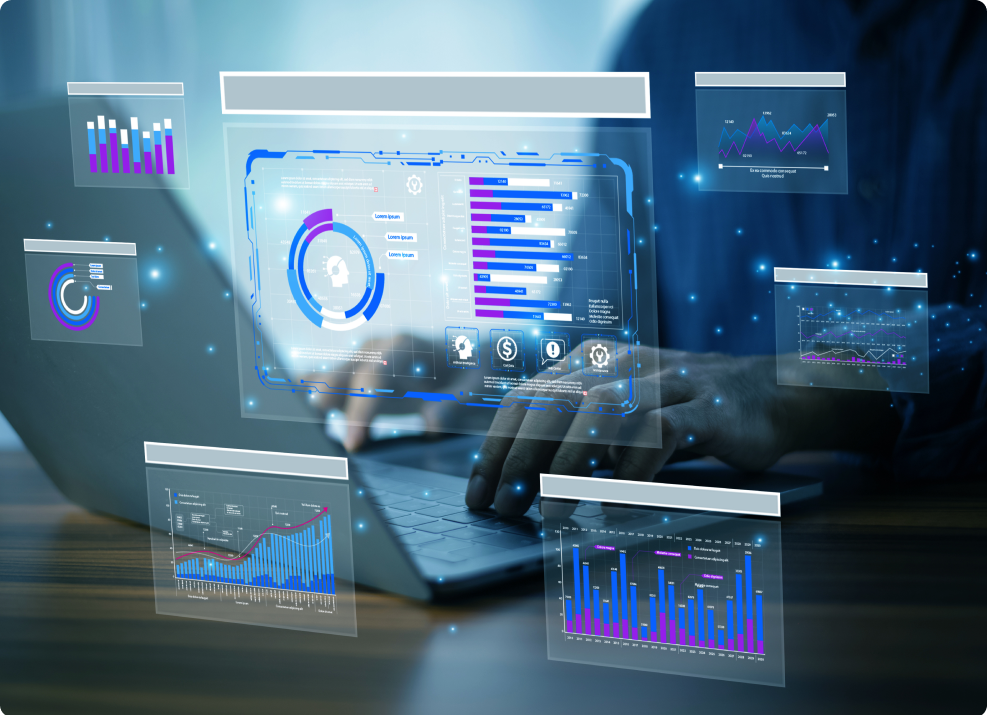
The reporting cycle is no longer the operating cycle. Portfolio companies move faster than monthly packs, spreadsheets, and manually reconciled KPI files.
Portfolio monitoring automation connects portfolio data, validation, analytics, alerts, and reporting into a continuous workflow. It gives Deal Teams and Operating Partners earlier visibility into performance, risk, and execution of value creation while reducing reporting friction. McKinsey reports that AI is already improving the speed and consistency of portfolio monitoring, while Deloitte links modern data architectures with stronger portfolio value creation. Brownloop brings this model into PE workflows through data engineering, AI, analytics, and automation.
Published on:
Portfolio Monitoring
7 min read
- October 30, 2026
The reporting cycle is no longer the operating cycle. Portfolio companies move faster than monthly packs, spreadsheets, and manually reconciled KPI files.
Portfolio monitoring automation connects portfolio data, validation, analytics, alerts, and reporting into a continuous workflow. It gives Deal Teams and Operating Partners earlier visibility into performance, risk, and execution of value creation while reducing reporting friction. McKinsey reports that AI is already improving the speed and consistency of portfolio monitoring, while Deloitte links modern data architectures with stronger portfolio value creation. Brownloop brings this model into PE workflows through data engineering, AI, analytics, and automation.
- Introduction
- Ready to Modernize Your Portfolio Monitoring?
- What is Portfolio Monitoring Automation in Private Equity?
- Traditional Monitoring
- Automated Monitoring
- Why Manual Monitoring Falls Short in Modern Private Equity Firms
- Key Technologies Driving Portfolio Monitoring Automation
- Core Benefits of Portfolio Monitoring Automation
- Integration with FP&A and Reporting Workflows
- Key Challenges and How to Overcome Them
- Tools Supporting PE Portfolio Automation: How Brownloop Can Help
- Conclusion: From Manual Oversight to Strategic Intelligence
Introduction
AI and automation improve the portfolio monitoring process by replacing repetitive collection and reconciliation with continuous data flows, exception-based monitoring, and governed reporting.
The difference is practical. In a manual model, an analyst collects spreadsheets, reconciles definitions, checks formulas, and builds a portfolio pack. In an automated model, source data flows into a governed layer, validation rules flag exceptions, dashboards refresh, and alerts surface deterioration before the next review meeting.
The Growing Complexity of Portfolio Management in Private Equity
Every additional portfolio company introduces another reporting cadence, ERP structure, KPI taxonomy, and management process. Add LP requests, compliance requirements, valuation workflows, ESG metrics, and value-creation reporting, and manual aggregation quickly becomes an operating constraint.
McKinsey also points to longer, more complex holding periods and greater reliance on operational value creation, raising the standard for portfolio oversight.
The Need for Real-Time Insights and Automation
Real-time monitoring shifts attention from assembling data to acting on exceptions. Continuous KPI tracking identifies performance drift as it develops. Automated alerts flag covenant pressure, deteriorating margins, liquidity issues, or missed operating milestones. Predictive analytics adds a forward view through trends and scenarios.
Deloitte specifically identifies real-time analytics as a driver of faster portfolio decisions.
Transform Portfolio Monitoring with AI
Discover how Brownloop helps PE firms automate reporting, track portfolio KPIs, and turn performance insights into faster decisions.
Ready to Modernize Your Portfolio Monitoring?
Modernizing monitoring shortens reporting cycles, reduces reconciliation work, improves data consistency, and gives investment teams a clearer portfolio-wide view.
The real gain is decision velocity. Operating Partners see emerging issues earlier, CFOs work from cleaner reporting inputs, and Investment Committees spend less time debating data integrity and more time evaluating action.
What is Portfolio Monitoring Automation in Private Equity?
Portfolio monitoring automation covers the full monitoring lifecycle: ingestion, validation, KPI calculation, analysis, alerting, reporting, and workflow routing.
Integrations connect source systems. Automation standardizes recurring tasks. AI handles document extraction, anomaly detection, pattern recognition, and first-pass analysis. Human oversight remains central for judgment, approvals, and investment decisions.
Definition and Scope
In practice, automation includes pulling financials from accounting systems, refreshing KPI dashboards, checking reporting completeness, identifying unusual variance, tracking covenants, and producing recurring portfolio reports.
It also extends to adjacent workflows, including hire-close acceleration for portfolio companies where workforce data, approvals, and integration workflows need tighter coordination. Human review remains essential where interpretation, accountability, or capital decisions are involved.
Differences Between Traditional and Automated Monitoring
Traditional monitoring scales by adding people and spreadsheets. Automated monitoring scales through integrations, rules, workflows, and reusable data models.
The difference appears across five areas: automation reduces manual effort, handles larger portfolios more efficiently, standardizes data quality, accelerates reporting, and surfaces decision-ready exceptions rather than forcing teams to review every data point manually.
Traditional Monitoring
Traditional monitoring relies heavily on emailed files, spreadsheets, manual consolidations, and recurring follow-ups with portfolio companies.
The weaknesses are familiar: inconsistent KPI definitions, broken formulas, version-control issues, slow reporting cycles, and substantial analyst time spent preparing information rather than analyzing it. Portfolio visibility becomes periodic rather than continuous, and risk often surfaces after performance has already moved.
Automated Monitoring
Automated monitoring creates governed data flows from source systems to support centralized data analytics and reporting.
Dashboards refresh from validated data, workflows route exceptions, AI identifies unusual movements, and reporting operates on a repeatable cadence. The model improves consistency across holdings and allows the monitoring infrastructure to scale without replicating manual effort for every new portfolio company.
Why Manual Monitoring Falls Short in Modern Private Equity Firms
As portfolios scale, manual processes become more than an efficiency issue. They slow decisions, weaken comparability, and increase operational risk.
Time Delays
Reporting speed therefore affects intervention speed.
Data Inconsistency
Standardized KPI logic and governed data models establish comparability before benchmarking or AI analysis begins.
Risk of Human Error
Automation does not eliminate review; it moves review toward exceptions rather than repetitive checking.
Multiple Data Sources
Without integration, teams repeatedly export, transform, and reconcile those sources. The same problem appears in specialized workflows such as tools for automating ownership tracking in SPVs, where accurate entity and ownership data depends on consistent source-system connections.
Key Technologies Driving Portfolio Monitoring Automation
No single technology automates portfolio oversight. Effective portfolio monitoring tools combine integrations, governed data, BI, AI, and document intelligence.

APIs and Real-Time Data Integration
APIs connect ERP, CRM, accounting systems, portfolio platforms, and data warehouses. Automated synchronization keeps financial and operating data current while reducing repeated exports.
Brownloop’s architecture connects portfolio, finance, CRM, document, and enterprise data sources through governed pipelines.



Dashboards and Business Intelligence Tools
Role-specific dashboards give Operating Partners, Deal Teams, executives, and LP-facing teams different views of the same governed data.
Dashboards move portfolio reviews away from static packs toward current KPI trends, variances, risk indicators, and value-creation progress.

AI/ML for Trend Detection & Forecasting
AI and machine learning extend monitoring into forecasting, anomaly detection, and pattern recognition.
Models identify unusual KPI movements, evaluate trends, and support scenario analysis. McKinsey notes that leading sponsors are increasingly embedding AI into traditional value-creation levers rather than treating it as a standalone experiment.



OCR and NLP for Financial Statement Ingestion
OCR and natural language processing extract structured data from financial statements, PDFs, board materials, and other unstructured documents. NLP also supports classification and summarization, reducing the manual effort required to move portfolio information from documents into analytical workflows.
Core Benefits of Portfolio Monitoring Automation
Automation improves operating efficiency, governance, transparency, and the speed at which portfolio signals become action.
Real-Time Performance Visibility
Continuous KPI monitoring gives teams an always-current view of portfolio health. Exceptions surface immediately, supporting earlier operational intervention and more focused review.
Faster Reporting Cycles
Automated data flows and report generation reduce recurring preparation work. Teams spend less time assembling packs and more time explaining variance, assessing risk, and determining action.
Early Risk Identification
AI-driven anomaly detection highlights unusual changes in liquidity, margins, leverage, covenant headroom, or operational KPIs. Predictive monitoring shifts risk management toward earlier investigation.
Improved LP Transparency and Trust
Standardized, governed data strengthens LP reporting and audit readiness. Brownloop’s Private Funds CFO perspective emphasizes growing demand for more frequent, traceable information and clear accountability around AI-generated outputs.

Use Cases: How PE Firms are Using Automation Today
Brownloop has implemented portfolio data harmonization, workflow monitoring, KPI dashboards, and portfolio operations reporting across PE environments.
 Fund-Level vs Asset-Level Tracking
 Asset-level monitoring focuses on company performance, operating drivers, risks, and value-creation initiatives. Fund-level monitoring aggregates those results into NAV, IRR, TVPI, DPI, cash flows, and overall exposure.
Strong architectures connect both layers rather than treating them as separate reporting environments.
KPI Benchmarking
KPI Benchmarking Cross-portfolio benchmarking compares holdings against internal peers, historical performance, budget, or external market data.
Preqin’s reporting-grade indices support portfolio and fund-level benchmarking using validated cash-flow data, while its peer benchmarks support comparison by strategy, geography, vintage, and fund characteristics.
ESG and Compliance Flagging
ESG and Compliance Flagging Automated workflows track ESG metrics, policy requirements, reporting gaps, and compliance exceptions. Governance workflows assign ownership and preserve an audit trail for review.
Integration with FP&A and Reporting Workflows
Portfolio monitoring becomes more valuable when it feeds planning, forecasting, valuation, and investment reporting rather than sitting in a separate dashboard.
Connecting Portfolio Data to Fund-Level Models
Governed company-level data feeds consolidated models for cash flow, valuation, NAV, and performance reporting. This creates tighter links between operating performance and fund-level economics.
Automation in LP Reporting Packages
AI-assisted workflows generate first-pass portfolio commentary, board summaries, and LP updates from governed data. Human review preserves accountability and ensures that investment context is not replaced by automated prose.
Creating Unified Data Lakes for Insights
A centralized or federated data architecture gives BI and AI the same governed foundation. Deloitte highlights modern data architecture, lineage, quality, and real-time ingestion as core requirements for scaling analytics and AI in alternatives.
Key Challenges and How to Overcome Them
Automation succeeds when firms address data governance, process standardization, and adoption alongside technology.
Data Silos Across Portfolio Companies
Standardized data models, APIs, common KPI definitions, and governed integration layers reduce fragmentation without forcing every portfolio company onto the same application stack.
Resistance to New Tech
Adoption requires stakeholder sponsorship, role-specific training, clear ownership, and workflows that fit how teams already operate. Change management belongs in the implementation plan, not after deployment.
Lack of Real-Time Data Access
Cloud integrations, APIs, and automated synchronization reduce dependence on manual file transfers and stale extracts. The goal is not real-time everywhere; it is timely data where intervention depends on speed.
Tools Supporting PE Portfolio Automation: How Brownloop Can Help
Brownloop combines PE workflow expertise with data engineering, AI, analytics, and automation. Its portfolio work links data infrastructure directly with value-creation execution.

Purpose-Built for Private Equity: The Brownloop Approach
Brownloop works across portfolio monitoring, value creation, fund operations, and investment workflows rather than treating monitoring as an isolated BI project. Its approach starts with governed data and workflow design, then applies AI where it improves speed, analysis, or decision support.


What’s Included: Capabilities That Drive Results
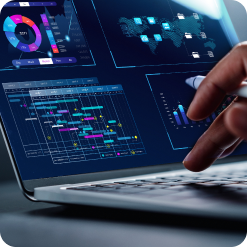
Brownloop’s portfolio capabilities span AI agents, automated data ingestion, KPI dashboards, workflow automation, benchmarking, predictive analytics, alerts, and reporting.
The underlying architecture also supports integrations across CRM, finance, documents, portfolio systems, and enterprise data platforms.
- Automated Reporting: From LP reports and compliance packs to variance analysis and board presentations, our NLP agents generate polished outputs from live data.
- Scenario Planning & Forecasting: AI-driven models simulate IRR, exit timelines, working capital shifts, and macroeconomic stress tests.
- Value Creation Tracking: Map underwritten assumptions to realized results across revenue, cost, and synergy levers with visual accountability.

What to Expect with Kairos by Brownloop
Kairos by Brownloop is Brownloop’s AI operating layer for private capital, designed to connect institutional memory, governed firm data, AI orchestration, and PE-specific workflows.
Its Portfolio Module supports portfolio-company monitoring, KPI tracking, board-deck generation, cross-portfolio pattern recognition, and value-creation plan tracking. The result is less manual reporting, stronger portfolio visibility, and a shorter path from performance signal to action.

Conclusion: From Manual Oversight to Strategic Intelligence
Portfolio monitoring automation changes the operating model, not just the reporting process. Integrated data replaces spreadsheet handoffs. Continuous KPI tracking replaces periodic visibility. Automated alerts focus attention on exceptions. AI moves analysis from describing past performance toward identifying risk, forecasting outcomes, and prioritizing action.
McKinsey reports that AI is already improving the speed and consistency of portfolio monitoring, while Deloitte finds that stronger data and AI foundations are associated with better portfolio value creation.
Brownloop’s view is that the next stage of portfolio oversight is a governed intelligence layer: one that continuously connects portfolio data, context, workflows, and decisions so intelligence compounds across the ownership lifecycle.
Transform Portfolio Monitoring with AI
Discover how Brownloop helps PE firms automate reporting, track portfolio KPIs, and turn performance insights into faster decisions.


