PEAK: Private Equity AI Curve
The New Measure of Competitive Advantage
PEAK (Private Equity AI Curve) is Brownloop’s AI maturity model for private equity, mapping how firms progress from scattered AI experimentation to connected institutional intelligence. Across five stages and eight operating dimensions, PEAK shows where teams stand today and what it takes to build an AI-enabled operating model across sourcing, diligence, IR, and portfolio operations.
The opportunities
AI Adoption is Not AI Maturity
AI adoption in private equity is accelerating, but adopting more tools does not create lasting advantage. Maturity reflects a firm’s ability to transform isolated AI usage into connected, governed, and compounding institutional intelligence.
Why Most Firms Get Stuck
Isolated AI Experiment
Successes fail to scale across PE workflows and teams.
Inconsistent Governance Models
Innovation outpaces control and oversight.
Institutional Knowledge Silos
Expertise remains trapped with individuals.
Why PEAK matters
Moving Beyond AI Adoption, Institutional Intelligence
Private equity firms are already using AI tools and LLMs, but to reach the PEAK, they must build connected data, effective AI governance in private equity, scalable workflows, and institutional intelligence that allows AI to compound over time.
Where Firms Begin
Most firms start with disconnected AI initiatives that improve productivity, but fail to create repeatable intelligence or firm-wide operating leverage.

Inconsistent AI usage

Fragmented workflows

Manual handoffs

Limited governance

How Firms Progress
As firms climb the PEAK, AI evolves into a connected operating capability that strengthens decisions, workflows, and institutional memory.

Connected intelligence

Shared context

Governed AI adoption

Compounding knowledge
Scaling AI across the firm
Every Team Climbs the PEAK Differently
Each function within a PE firm uses AI differently, yet the greatest impact of maturity is experienced when intelligence and decision-making capabilities evolve in synchrony.
Faster Due Diligence
AI diligence automation reduced CIM-to-IC timelines by nearly half using accumulated deal intelligence.
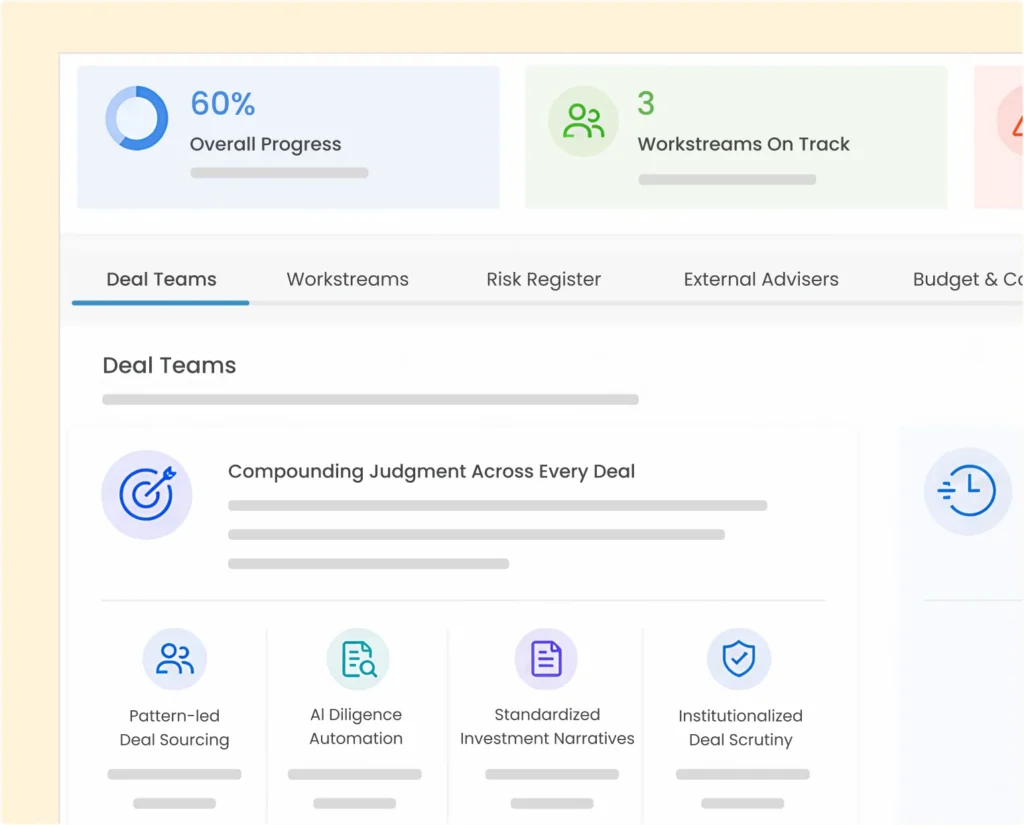
Compounding Judgment Across Every Deal
At higher stages of the AI maturity model in private equity, every deal benefits from accumulated firm-wide knowledge.

Pattern-led Deal Sourcing

AI Diligence Automation

Standardized Investment Narratives

Institutionalized Deal Scrutiny
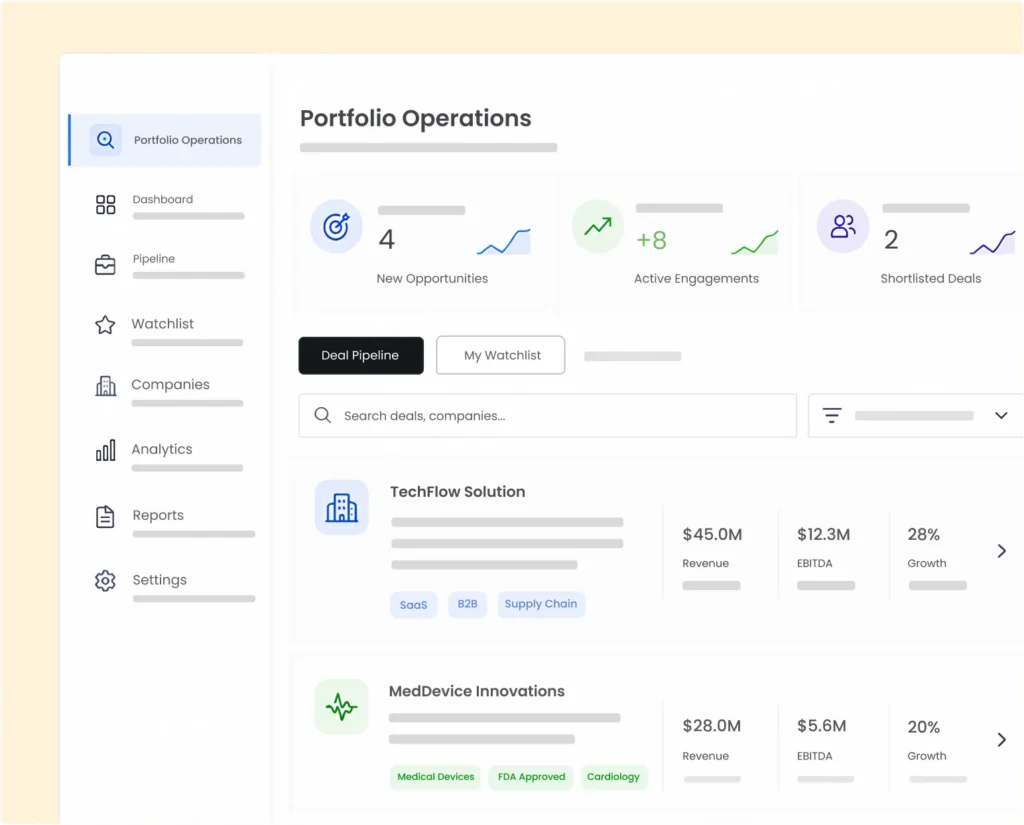
Accelerated EBITDA Visibility
Continuously updated AI value creation insights reduce decision lag, improving portfolio-level execution clarity.
Steering Value, Not Reporting It
In AI’s transformation within private equity’s framework, value creation teams can leverage portfolio monitoring automation for actionable insights across all PortCo intelligence.

Live Portfolio Performance View

Always-On Value Plan Tracking

Real-Time EBITDA Levers

Standardized Portfolio Comparisons
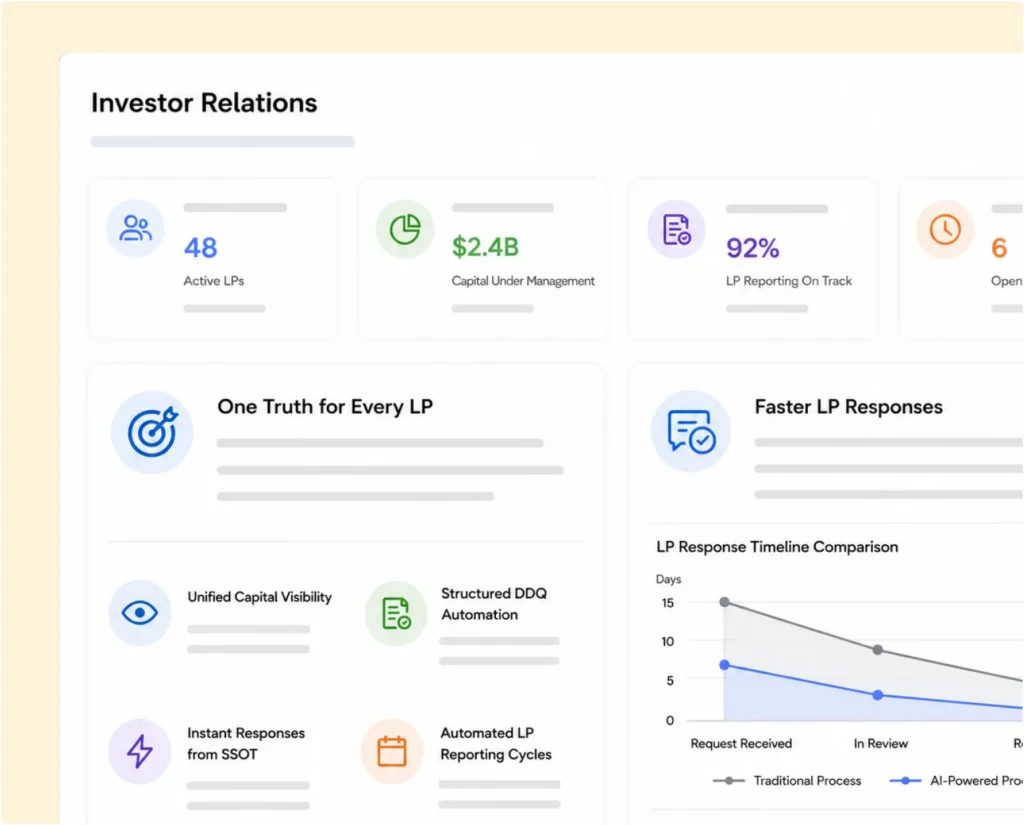
Faster LP Responses
Improve responsiveness by leveraging DDQ automation and LP reporting built on unified firm intelligence.
One Truth for Every LP
As AI in investor relations teams matures within private equity, reporting evolves with a unified LP view, supported by consistent logic.

Unified Capital Visibility

Structured DDQ Automation

Instant Responses from SSOT

Automated LP Reporting Cycles
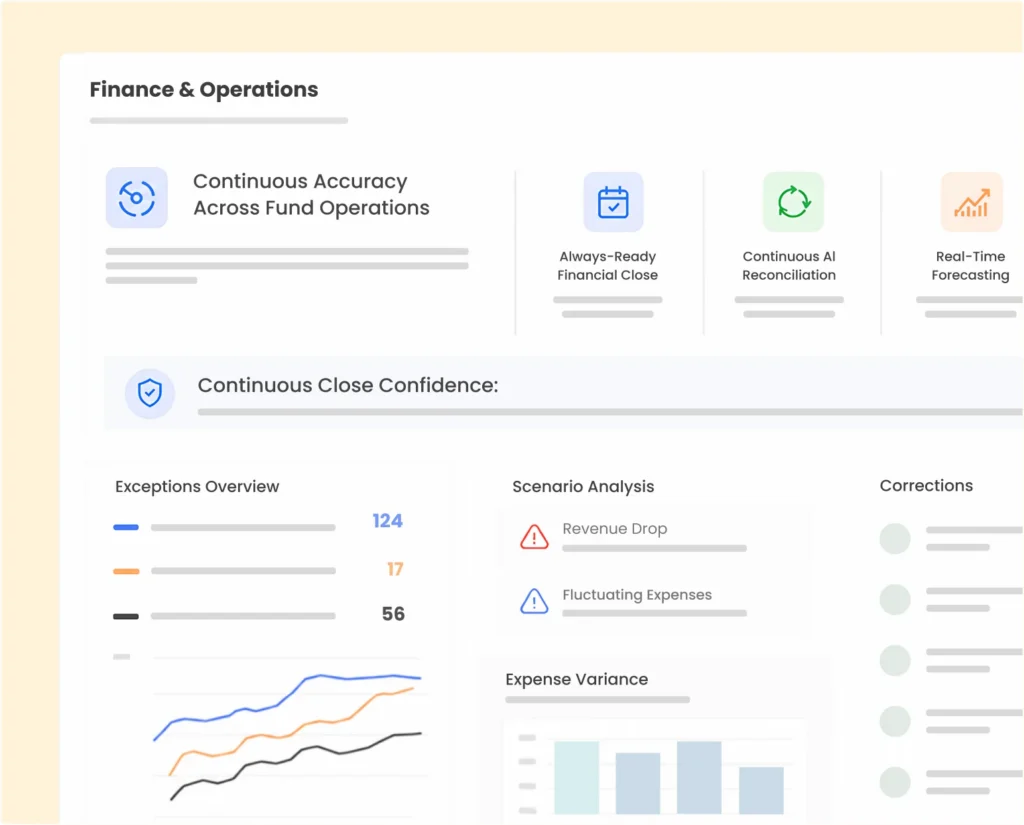
Continuous Close Confidence
Achieve always-on NAV and reconciliation, reducing close-cycle stress and creating a trusted, continuously accurate financial state.
Continuous Accuracy Across Fund Operations
AI strategies for PE firms empower finance and fund operations with continuous accuracy, where NAV, reconciliations, and reporting remain current.

Always-Ready Financial Close

Continuous AI Reconciliation

Real-Time Forecasting

Built-in Accuracy Checks
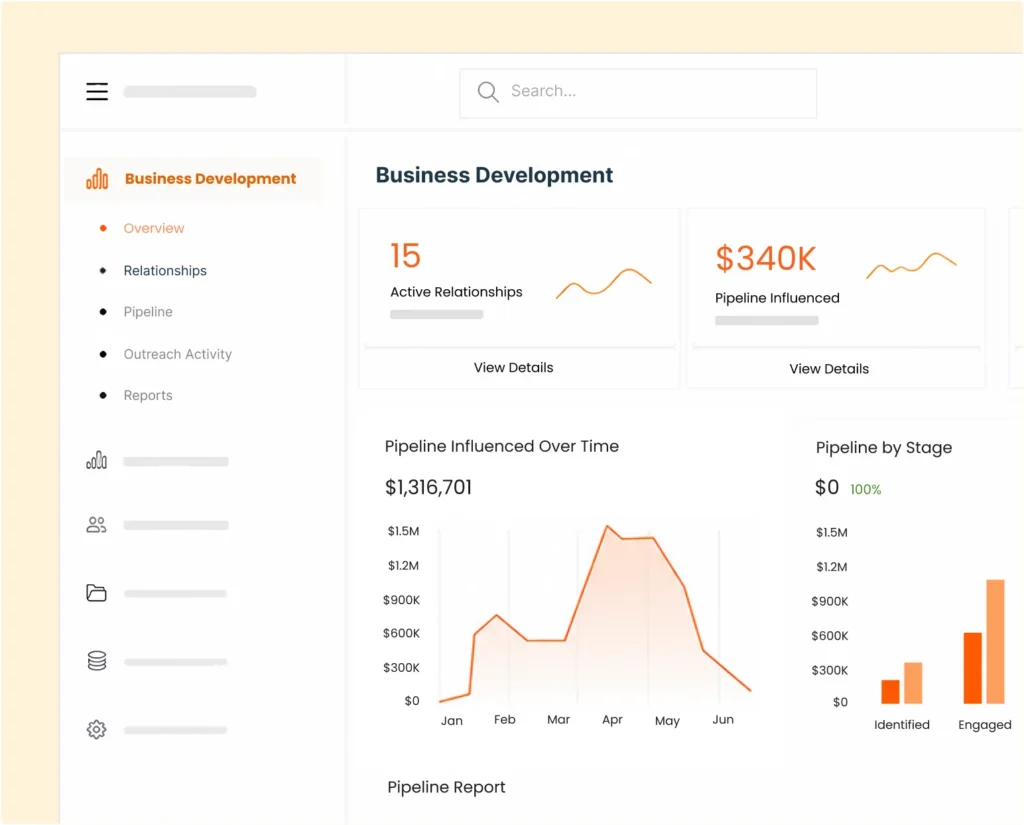
Stronger Pipeline Conversion
Convert relationship capital into measurable deal flow, improving proprietary access and deal-to-LOI conversion rates.
Relationship Capital That Belongs Firmwide
AI adoption allows BD teams to work with firm-owned intelligence, where deal sourcing and AI for investment teams compound relationship capital.

Signal-Driven Outreach

Long-Tail Surveillance

Encoded Investment Criteria

Institutional Memory
Where Does Your Firm Stand on the Journey to the PEAK?
The AI maturity assessment maps your firm’s capabilities and highlights the path toward connected institutional intelligence.
- Assess current capabilities
- Uncover scaling barriers
- Understand next priorities
- Build transformation roadmap
Eight Dimensions of the PEAK
AI Tools and Platforms
The LLMs, AI tools, and BI platforms
used across the firm.
Eight Dimensions of the PEAK
01
AI Tools and Platforms
The LLMs, AI tools, and BI platforms used across the firm.
Data Alignment and Integration
Institutional Intelligence
How knowledge is captured, shared, and reused over time.
Security, Privacy, and Access
The controls that govern how AI interacts with sensitive information.
AI Governance and Ethics
The frameworks that ensure AI is used responsibly and consistently.
Workflow Automation
The extent to which AI is embedded in business processes.
AI Talent and Culture
AI Measurement and ROI
The ability to track and quantify AI’s impact.
Five stages to reach the PEAK
The Progression From Experimental AI to Institutional Intelligence
The AI maturity model for private equity maps how firms move from individual experiments with isolated AI tools to connected, firm-wide intelligence systems, where institutional knowledge management enables AI to compound memory and become embedded into workflows and decision-making.
Stage 1
Foundational
AI is used for isolated tasks, but data and knowledge remain fragmented.
Stage 1
Foundational
AI is used for isolated tasks, but data and knowledge remain fragmented.
Stage 2
Emerging
Teams adopt AI tools and early governance appears, yet systems are disconnected.
Stage 3
Scaling
AI is in the workflows, and institutional knowledge accumulates across functions.
Stage 4
Integrated
Intelligence is connected, enabling governed, cross-functional decision-making.
Stage 5
Agentic
AI operating model becomes the firm’s intelligence layer, continuously learning and compounding context.
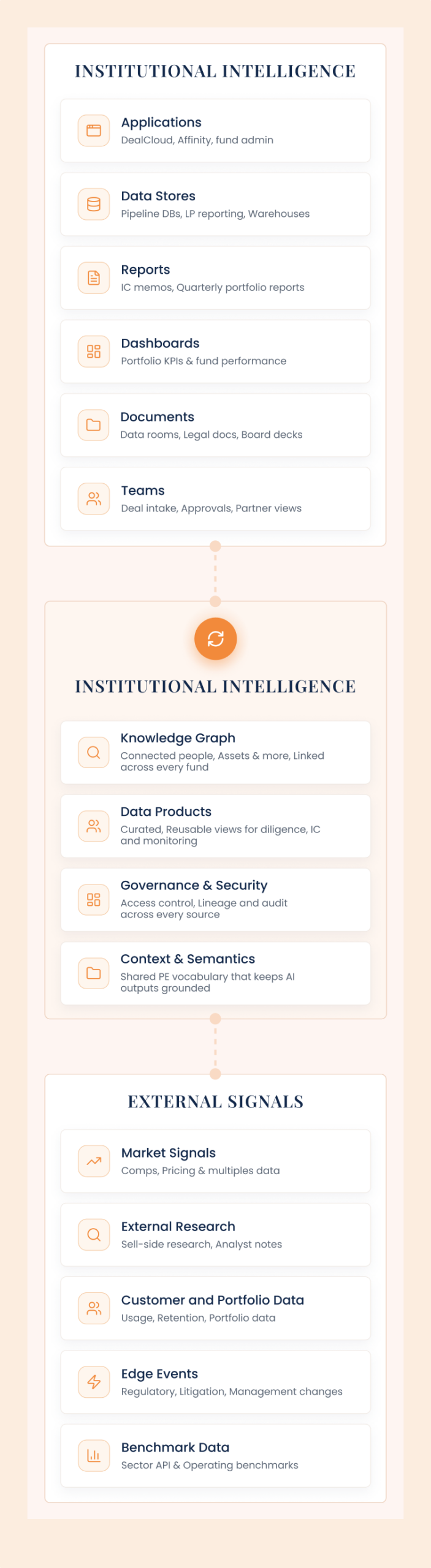
Institutional intelligence
The Knowledge Architecture Behind PEAK
Institutional intelligence in private equity is built on a three-layer architecture: enterprise data systems, compounding knowledge graphs, and an AI intelligence layer. As part of AI transformation in private equity, firms preserve institutional memory and enable AI that behaves like a senior partner grounded in the firm’s context.
Improved Deal Quality
At the agentic stage of AI implementation in private equity, firms experience a unified platform where deal sourcing and evaluation share context for consistent judgment through connected institutional intelligence.
- Shared deal context
- Consistent investment lens
- Unified sourcing view
Reduced Execution Friction
With AI scaling in private equity, investment workflows move into a unified platform where diligence, IC preparation, and reporting operate on shared intelligence, not fragmented documents and isolated workflows.
- Connected workflows
- Shared operating context
- Continuous information flow
Self-Learning AI System
An advanced AI operating model enables a unified experience powered by knowledge graphs, where every interaction and signal contributes to a continuously compounding layer of institutional memory.
- Unified intelligence layer
- Institutional memory compounding
- Firm-wide shared knowledge
Resources
Explore More on AI Maturity in Private Equity
How to Evaluate AI Readiness in Your PE Firm: A Practical Checklist
Conducting a comprehensive AI readiness assessment helps organizations identify gaps in data, governance, workflows, and technology integration before scaling AI initiatives.
Why PE Firms Need a Governance Layer Before They Scale AI
Scaling AI successfully requires a strong foundation for governance. Without a structured AI policy framework, AI systems remain fragmented, limiting their reliability.
Why Institutional Intelligence Will Define the Next Era of Private Equity
As access to frontier AI models becomes increasingly commoditized, the next era will be defined by institutional intelligence in private equity.
Understanding AI Maturity in Private Equity: A Strategic Framework
This article explores a practical AI maturity framework in private equity, outlining the stages firms progress through to build connected, enterprise-wide intelligence.

Every PE firm we speak with believes it is further along the AI maturity curve than it actually is. The gap is almost always in the invisible dimensions — institutional intelligence, governance, and measurement. This is where the work is harder, and the payoff is not immediate, but where the compounding advantage is real and durable. The firms that continuously assess their AI maturity and intentionally close capability gaps will do more than optimize operations; they will fundamentally reshape their competitive position.
CEO, Brownloop
Frequently Asked Questions
How can private equity firms assess their current level of AI maturity?
Private equity firms can check AI maturity through a structured AI maturity assessment that evaluates capabilities across data, governance, workflows, and institutional intelligence. A comprehensive AI readiness assessment helps identify gaps in adoption, scalability, and the underlying operating model required for AI transformation.
How does institutional knowledge influence AI adoption in private equity?
Institutional knowledge management is foundational to AI adoption in private equity. Firms with strong institutional knowledge management systems enable AI to operate on structured context rather than fragmented data, improving consistency in decision-making, accelerating learning across deals, and strengthening investment judgment over time.
What is the difference between experimental AI adoption and advanced AI capability?
Experimental AI adoption is typically tool-driven, isolated within teams, and focused on productivity gains. Advanced capability emerges when AI is embedded into workflows, supported by connected data, and governed through AI governance in private equity. This enables firms to move beyond individual use cases and build scalable intelligence across the organization, improving AI’s scalability over time.
When should a private equity firm consider AI advisory services?
Firms should consider AI advisory services when AI initiatives remain fragmented, difficult to scale, or fail to create consistent firm-wide impact. This is especially relevant when moving from experimentation to a structured AI strategy for PE firms, including governance design, capability planning, and enterprise-wide AI implementation in private equity.
How does an AI maturity assessment help prioritize AI investments?
An AI maturity assessment provides a clear view of capability gaps across the firm, helping leadership prioritize investments in data, governance, workflows, and institutional intelligence. Grounded in the AI maturity model in private equity, it ensures AI investments are aligned to value creation, AI’s scalability, and long-term governance objectives rather than isolated tools.